



The Accuracy of R Packages
When assessing the accuracy of R packages, the R Validation Hub differentiates R packages by the following types (see German et al, 20131):
- base and recommended (core) packages - developed by the R Foundation and shipped with the basic installation
- contributed (open source) packages - developed by anyone, and may differ in popularity and accuracy
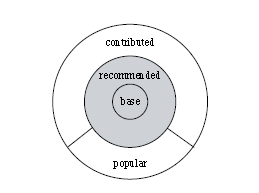 {alt=“source: German et al (2013): The Evolution of the R Software Ecosystem”}
Core packages and contributed packages are managed by different processes. Therefore, different requirements are needed to ensure that both types of packages reliably produces accurate results.
Base R and Recommended Packages
The R Foundation develops both the base and recommended packages, and follows practices that ensures the accuracy of each. These practices include:
- Proper maintenance of the R source code, and control of releases
- Testing the software and identifying issues for the Core Team to address
- The R Core Team hiring highly qualified individuals
- Validation testing each R release against known data and known results, and resolving all errors prior to release
After careful consideration, the R Validation Hub concludes that there is minimal risk using these core packages for regulatory analysis and reporting. For more information, see Base R and Recommended R Packages.
Contributed Packages
Since R is Open Source, contributed packages can be developed by anyone. Therefore, ensuring the accuracy of each contributed package is necessary.
R Validation Hub focuses on contributed packages on The Comprehensive R Archive Network (CRAN). All packages available on CRAN must pass a series of technical checks including an “R CMD” check. An “R CMD” check ensures that all submitted code has its:
- examples run successfully
- tests pass
- packages are compatible with other packages on CRAN
However, these checks do not guarantee the accuracy of a package and a risk assessment is necessary. The risk assessment proposed by the R Validation Hub includes:
- Package Maintenance
- release rate
- size of code base
- formal bug tracking
- Community Usage and Testing
- average downloads during in the last 12 months
- the amount of code that is tested by a formal testing framework
For more information about Package Maintenance and Community Usage and Testing, see R Packages page.
Tidyverse
According to https://www.tidyverse.org/:
The tidyverse is an opinionated collection of R packages designed for data science. All packages share an underlying design philosophy, grammar, and data structures.
Furthermore, the tidyverse is governed by a set of Design Principles that are used by the tidyverse team for consistency and to write better code.
Since tidyverse is held to such high standards and has a large user community, the R Validation Hub members are discussing if tidyverse can be labelled as minimal risk for regularly analysis and reporting.
The Reproducibility of R Installations
To ensure that R outputs can be reproducible, create and maintain R installations by using Docker containers and tools such as RStudio Package Manager.
As R versions and package versions change over time, creating and maintaining R installations becomes more complex. As versions are updated, define a process that checks and tests package integrity with dependencies.
Please note that the investigation of reproducibility is ongoing.
The Traceability of R Installations
Develop system and process controls to automatically document the R packages and installation dependencies that are used in R analyses.
Please note that the investigation of traceability is ongoing.
-
German, D.M. & Adams, Bram & Hassan, Ahmed E.. (2013). The Evolution of the R Software Ecosystem. Proceedings of the Euromicro Conference on Software Maintenance and Reengineering, CSMR. 243-252. 10.1109/CSMR.2013.33. ↩︎