

Case Studies

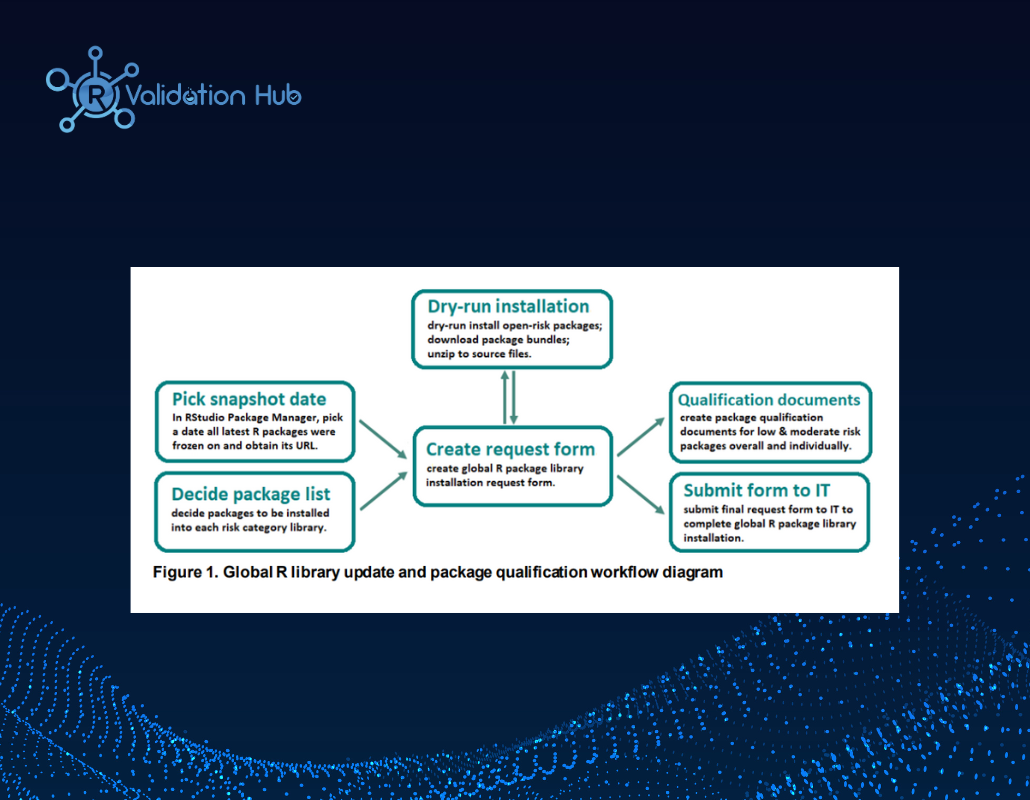
External R Package Qualification Implementation at Merck

Introduction

There has been a growing interest in pharmaceutical industry to use R for clinical trial data analysis and reporting (A&R). Using R for regulatory submission purposes requires careful qualification of R packages given that the open-source packages differ in their quality of development. Many cross-industry initiatives including R Validation Hub and TransCelerate have published framework for qualifying R packages to be used in a regulatory setting (Nicholls, Bargo, & Sims, 2020) (Amoruccio, Lee, & Woodie, 2021). Our organization has been exploring the use of R in a regulatory setting for the past few years. A framework has been developed internally for qualifying external R packages that incorporates elements from both R Validation Hub and TransCelerate framework. This framework is currently being used to qualify both internally developed and externally sourced R packages for use in clinical trial A&R. In this document, we demonstrate this risk-based package qualification framework using the GGally R package. We provide the workflow as well as relevant details regarding the package qualification process used to qualify GGally as a moderate risk R package. We hope this inspires other organizations to use R in a regulatory setting as well as generate discussion to improve our existing framework.
Continue reading

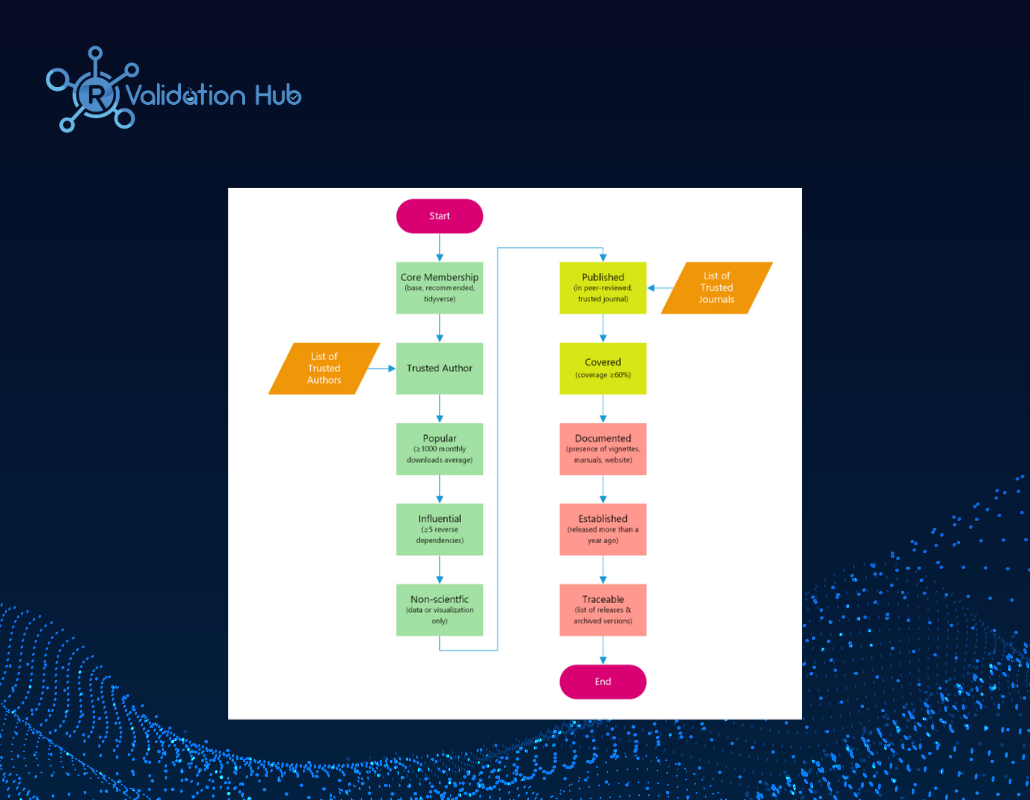
R Package Risk Assessment at Novartis

1 INTRODUCTION

Whereas data validation is already a standard precursor to any form of scientific analysis in drug development and the validation of in-house built source code used to generate quantitative deliverables follows standard practices as well, the increasing popularity of open source programming languages like R in this context have created a new type of challenge: the validation of the R packages which are imported and used in the drug submission/ approval projects. Such packages are distributed freely, almost always without any warranties, and may be of varying quality. Therefore, Novartis has been working on defining a package risk-based validation approach qualifying R packages. Its risk assessment was designed based on the two business use cases, which reflect current business activities.

Continue reading

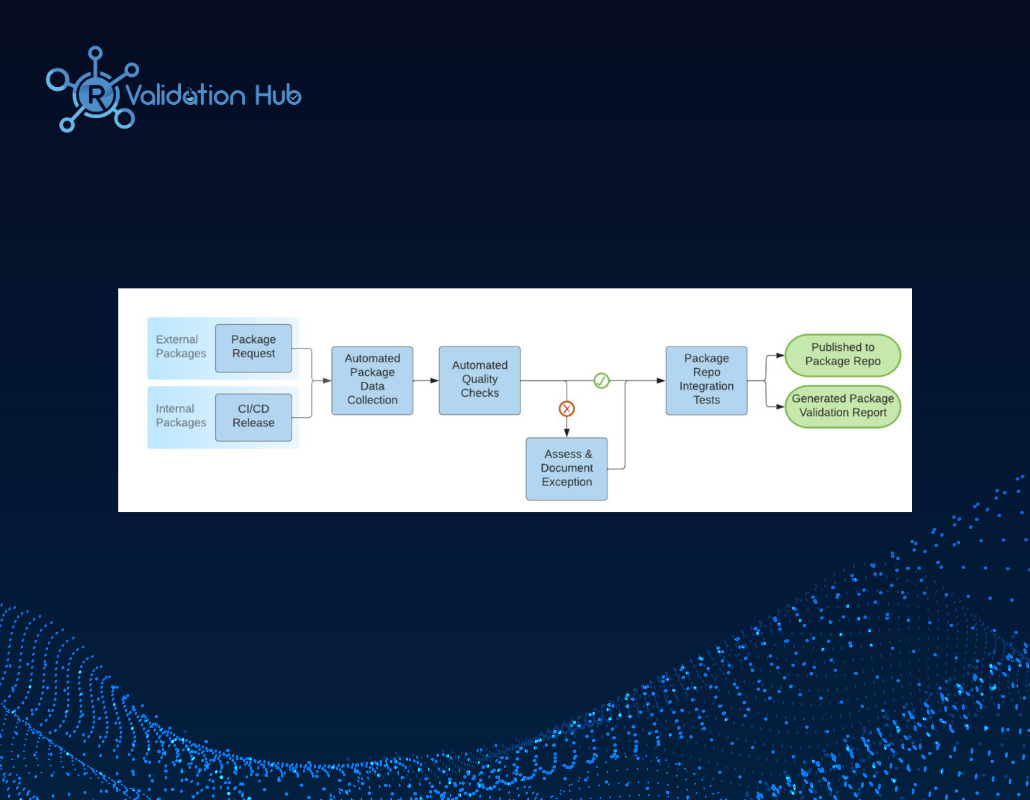
Automated R Package Validation at Roche

This case study walks through the automated R package validation process at Roche that utilizes a human-in-the-middle component to reconcile any gaps that arise in the automated metadata checks. The approach balances automation with risk mitigation and encourages in-house package development and iteration by introducing transparency to the validation process. The result reinforces best practices in R programming and package development while ensuring high package quality for use within a regulatory environment.

Continue reading

Risk Assessment of R Packages at Merck KGaA/EMD Serono

Introduction

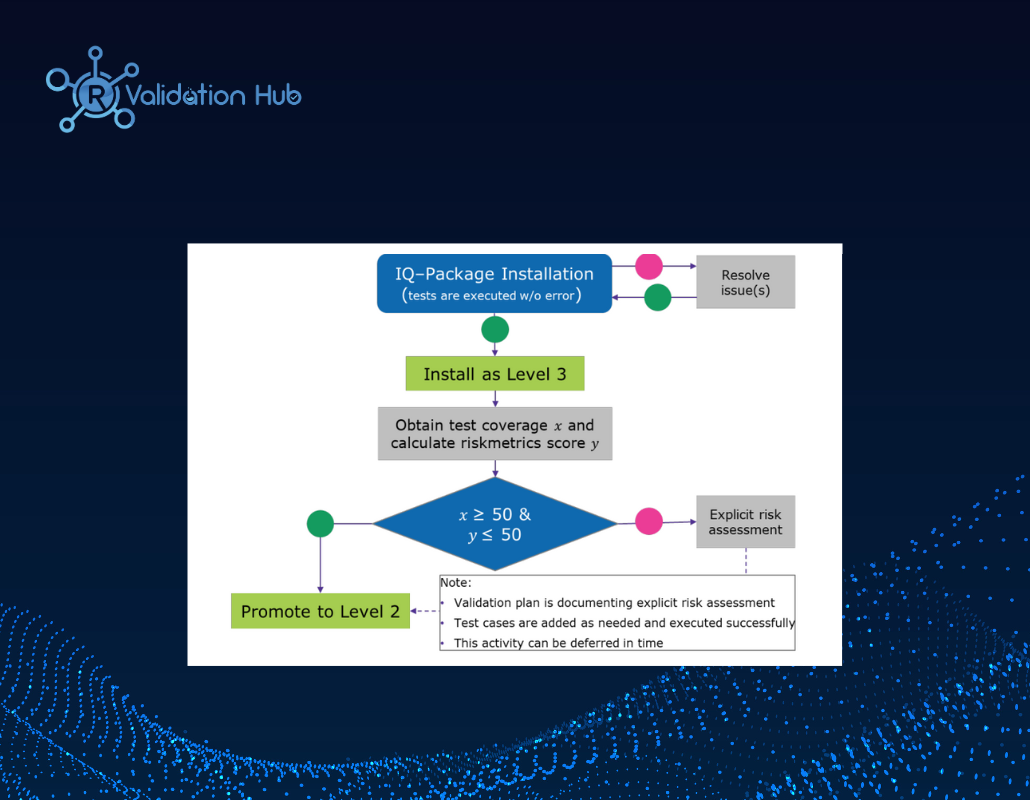
Like many other companies, Merck KGaA/EMD Serono has embarked on their journey to enable the use R for regulatory submissions. Following the framework introduced by the R validation hub (Nicholls et al., 2020), we started to develop an algorithm to qualify a CRAN package as a Merck standard package in our GxP environment. In a nutshell: Given the R Foundation’s effort to ensure the validity of base and recommended R packages, these packages are classified as level 1. If an additional R package passes the installation qualification and successfully executes available tests, the package will be made available to the user and (temporarily) classified as level 3 package. Then, an automated risk assessment of R packages is performed based on the test coverage score (more is better) and the riskmetric score generated from the meta-information (smaller is better). If pre-defined thresholds are fulfilled, the package is qualified as Merck standard package (i.e., promoted to level 2), otherwise an explicit (manual) risk assessment is needed. This 3-tier model provides a useful framework for the users to define a risk-based quality control of outputs when using R. In this document, we introduce our pathway to a risk-based assessment of R packages at Merck. We provide relevant details on the statistical analysis which led to the definition of thresholds supporting a robust classification of CRAN packages as Merck standard packages. We want to inspire other companies and seek feedback from the community.

Continue reading